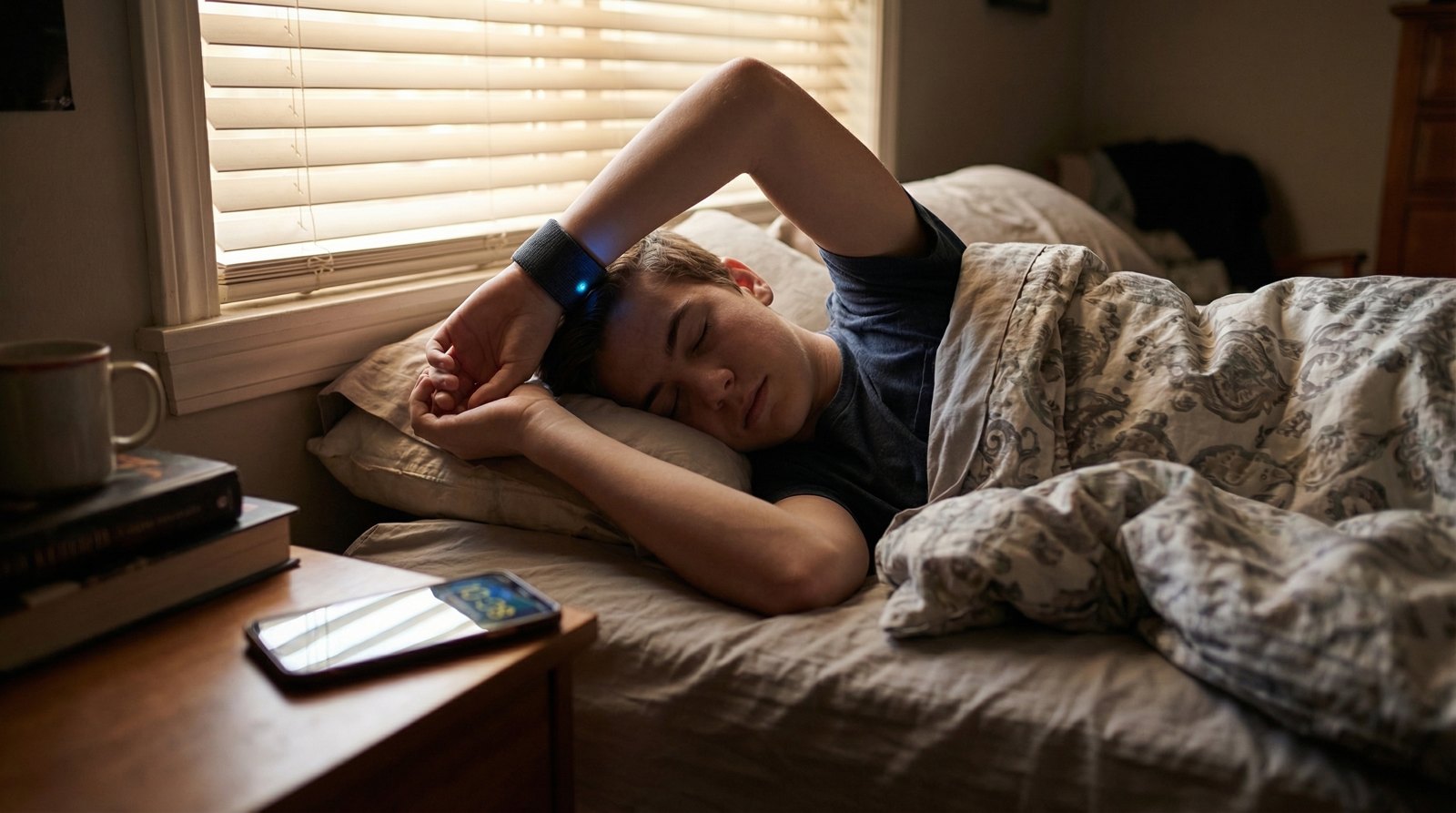
A vibrating wrist alarm is a wearable alarm that wakes the sleeper with vibration on the wrist instead of depending only on sound in the room. It makes the most sense for people who repeatedly sleep through normal alarms, need a quieter wake-up option, or want to stop relying on another person to get them out of bed.
That distinction matters more than it sounds. A lot of alarm advice is really just volume advice: turn it up, add more alarms, put the phone across the room, use a louder tone, try a second device. Sometimes that works. But sometimes it just creates more noise, more stress, and more frustration without actually solving the wake-up problem.
When that happens, people often start looking for something that works on a different pathway. That’s exactly where a vibrating wrist alarm comes in.
What is a vibrating wrist alarm, exactly?
A vibrating wrist alarm is a wearable device that sits on the wrist and delivers a physical cue at wake-up time. Instead of asking the sleeper to notice a sound somewhere in the room, it places the wake-up cue directly on the body.
That makes it different from a standard clock radio, different from a phone alarm on the nightstand, and a little different from a regular smartwatch alarm too. The point isn’t just silence. The point is directness.
If someone keeps sleeping through sound alarms, switching the cue from hearing to touch can be a much more logical next step than simply turning the volume up again.
Why do some people sleep through sound alarms?
This is the part that matters most, because it’s usually the reason someone is searching this phrase in the first place.
When a person keeps sleeping through alarms, it’s easy to turn it into a character issue. Maybe they’re lazy. Maybe they’re not trying hard enough. Maybe they’re staying up too late and “choosing” to make mornings harder. Sometimes there are behavior problems in the mix, of course. But often the bigger issue is that the wake-up method itself is a bad fit.
Teens are a good example. Their sleep timing often shifts later, which makes early mornings harder than many adults expect. Deep sleepers and many ADHD users can also have a huge gap between hearing an alarm in theory and actually responding to it in real life.
The useful reframe
If somebody keeps sleeping through normal alarms, the first conclusion should not be “they don’t care.” Sometimes the better conclusion is: the signal isn’t cutting through, so the routine needs a different tool.
That’s why people eventually start searching for bed shakers, silent alarms, wearable alarms, and vibrating wrist alarms. They aren’t usually chasing novelty. They’re trying to escape a routine that has already stopped working.
Who is a vibrating wrist alarm most likely to help?
This kind of device isn’t for everybody. But it tends to make the most sense for a few very specific groups.
Deep sleepers who have already tried everything louder
If someone has already tried phone alarms, multiple alarms, louder alarms, alarms across the room, and maybe even alarms that wake the entire house, then a wearable option starts to look much more reasonable. At that point, the issue usually isn’t effort. It’s fit.
Parents stuck in the morning battle with a teen
This is one of the clearest use cases. A lot of families eventually end up in the same loop: the parent becomes the real alarm clock. There’s knocking, reminding, escalating, and frustration on both sides. A vibrating wrist alarm can help because the whole point is to remove the parent from the wake-up loop rather than just asking the parent to become more forceful.
ADHD mornings
For some ADHD users, the problem isn’t only waking up. It’s the entire transition from sleep to action. Sound alarms can become background noise, easy to snooze, or weirdly invisible after a while. A tactile cue can feel harder to mentally file away.
Deaf or hard-of-hearing users
This is one of the strongest reasons to use a wearable vibrating alarm. If sound isn’t the right channel, a physical wake-up cue becomes an obvious alternative. A wrist alarm can also be a quieter, more personal option than a large room-based setup.

How does a vibrating wrist alarm compare with other wake-up options?
Most people searching this phrase aren’t just asking what the product is. They’re asking whether it will work better than what they already have.
Compared with a loud alarm clock
Loud alarms still work fine for lots of people. But if you’re already researching vibrating wrist alarms, there’s a good chance you’ve outgrown that solution. Making the room louder often creates more stress for everyone else without fixing the problem for the sleeper.
Compared with a phone alarm
Phone alarms are convenient, but convenience is not the same thing as reliability. They’re easy to dismiss, easy to snooze, and easy to sleep through if the brain has already stopped treating them as a meaningful wake-up cue.
Compared with a smartwatch alarm
A smartwatch alarm may be enough for some people. But many smartwatches are general-purpose devices first and wake-up tools second. If somebody is searching specifically for a vibrating wrist alarm, they may be looking for something more intentional than a generic wrist notification.
Compared with a bed shaker
Bed shakers can work too, especially for deaf or hard-of-hearing users. But a wrist alarm has a different advantage: portability and direct contact with the body. For teens, dorms, travel, or people who move a lot in sleep, that can matter.
What should you look for when shopping for one?
If you’re comparing options, it helps to ignore hype and focus on fit. The best wearable alarm for one person may be the wrong choice for another.
- Comfort: it has to be wearable enough to keep on overnight.
- Wake-up focus: is it really designed around waking up, or is the alarm just a side feature?
- Quiet practicality: can it help the wearer wake without blasting roommates, siblings, or partners?
- Use-case fit: a teen school-morning problem is different from an adult wanting a silent work alarm.
- Brand understanding: does the brand sound like it actually understands the morning problem, or is it just selling another gadget?
That last point matters more than people think. A trustworthy page in this category should feel like it understands the real morning situation behind the search, not just the product category itself.
When does Dawn Band make sense?
Dawn Band makes the most sense when the person searching isn’t looking for just any alarm. It fits best when the real need is a wearable wake-up solution because normal alarms are already not working well enough.
That can include:
- parents who are tired of acting as the human alarm clock every morning
- deep sleepers who ignore ordinary alarms
- ADHD users who need a more tactile wake-up cue
- deaf or hard-of-hearing users who want a silent alarm option
A calm recommendation, not a hard sell
If this sounds like the exact problem you’re trying to solve, Dawn Band is one wearable option worth looking at. The pitch isn’t about shock, punishment, or “forcing” somebody awake. It’s about using a physical cue to create a calmer, more independent morning routine when sound alarms have already stopped doing the job.
That’s also why the product tends to resonate so much with parents: the value isn’t only alarm performance. It’s relief from being the person who has to walk back into the bedroom four times before school.
Frequently asked questions about vibrating wrist alarms
Is a vibrating wrist alarm better than a loud alarm?
It can be, but mostly for the right user. If sound alarms still work well for you, you may not need anything else. If they’ve already failed repeatedly, a wearable vibration alarm can be a smarter next step than simply making the room louder.
Can a vibrating wrist alarm help a teen wake up for school?
Yes, especially when the family has fallen into a pattern where the parent has to keep intervening. A wearable alarm can support more independence and reduce the daily conflict around wake-ups.
Do vibrating wrist alarms work for ADHD mornings?
They can. Many ADHD users find that sound alarms become too easy to snooze or mentally tune out. A tactile cue can feel more immediate than another sound in the room.
Are vibrating wrist alarms useful for deaf or hard-of-hearing users?
Yes. That is one of the clearest use cases, because the alarm does not depend on hearing sound in the room to work as intended.